
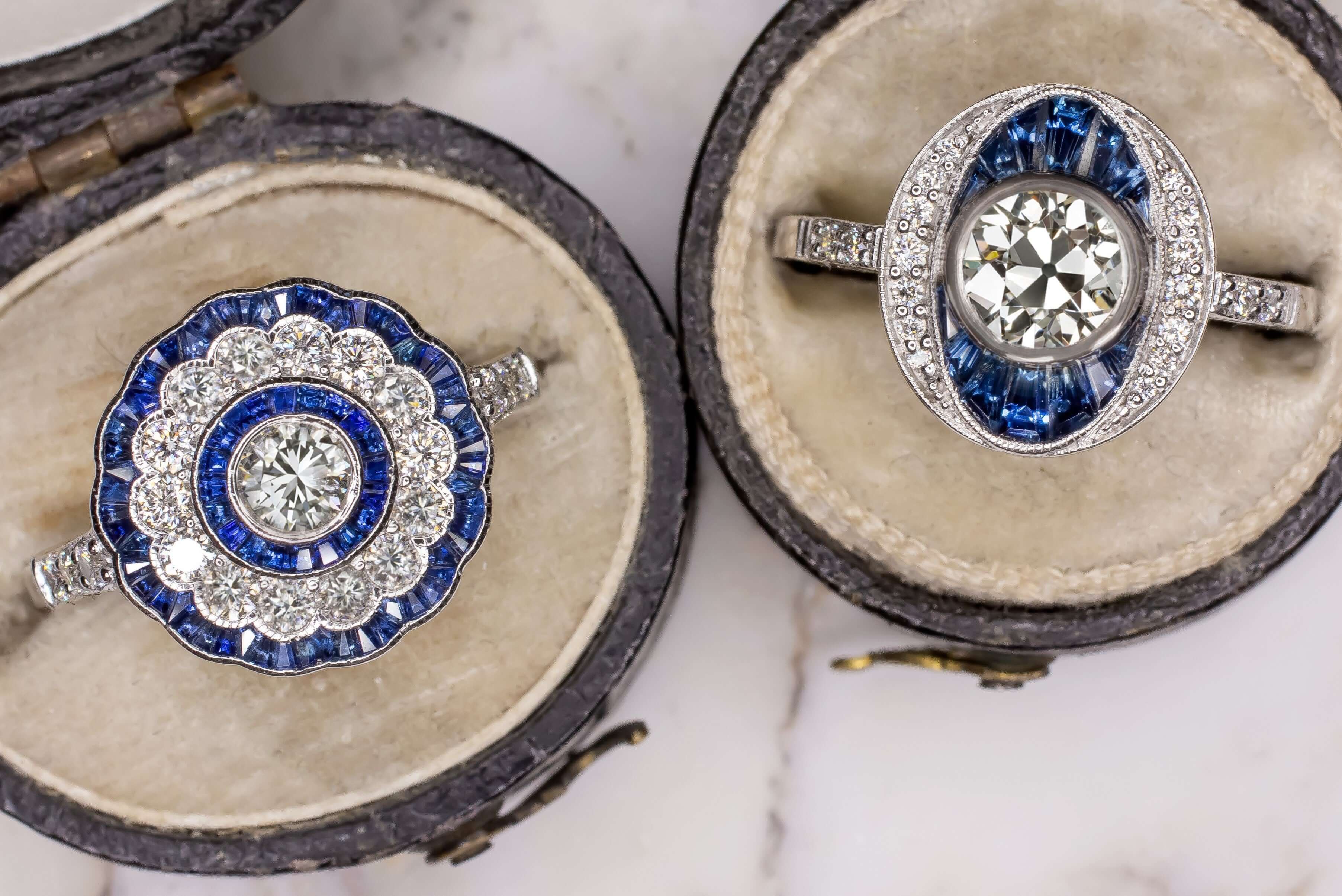
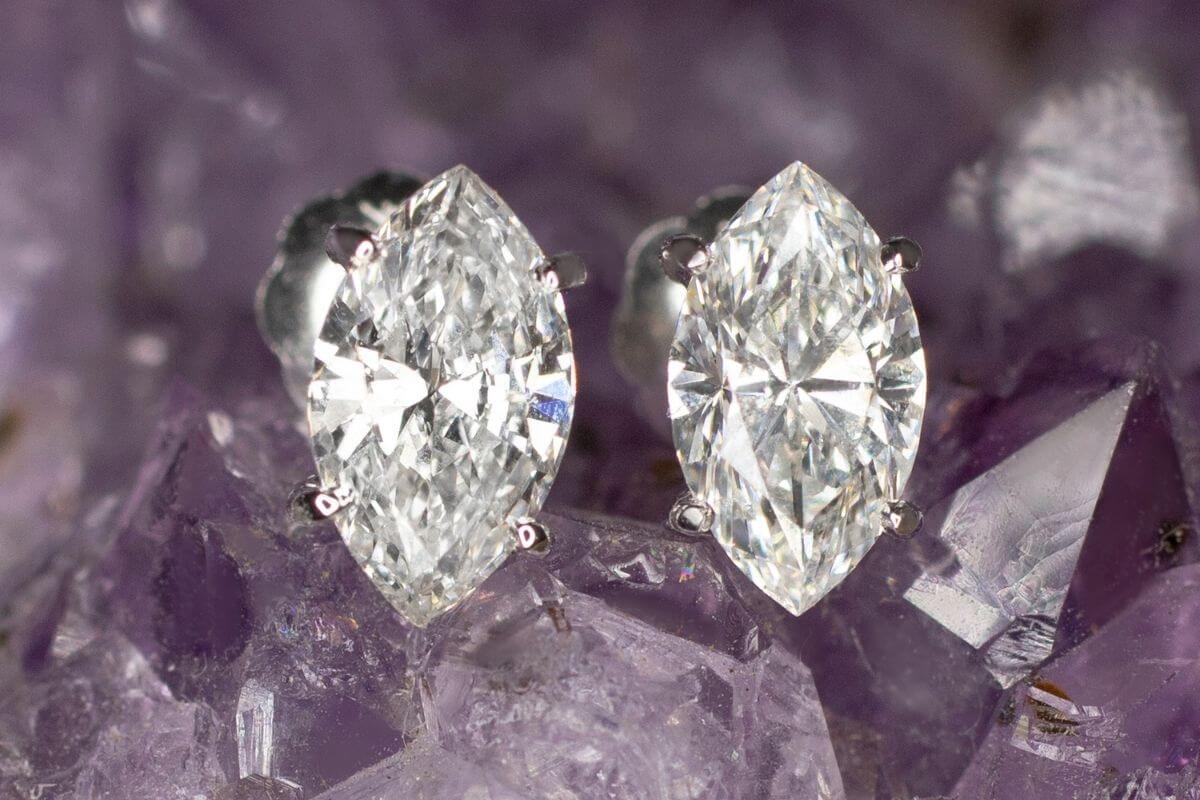
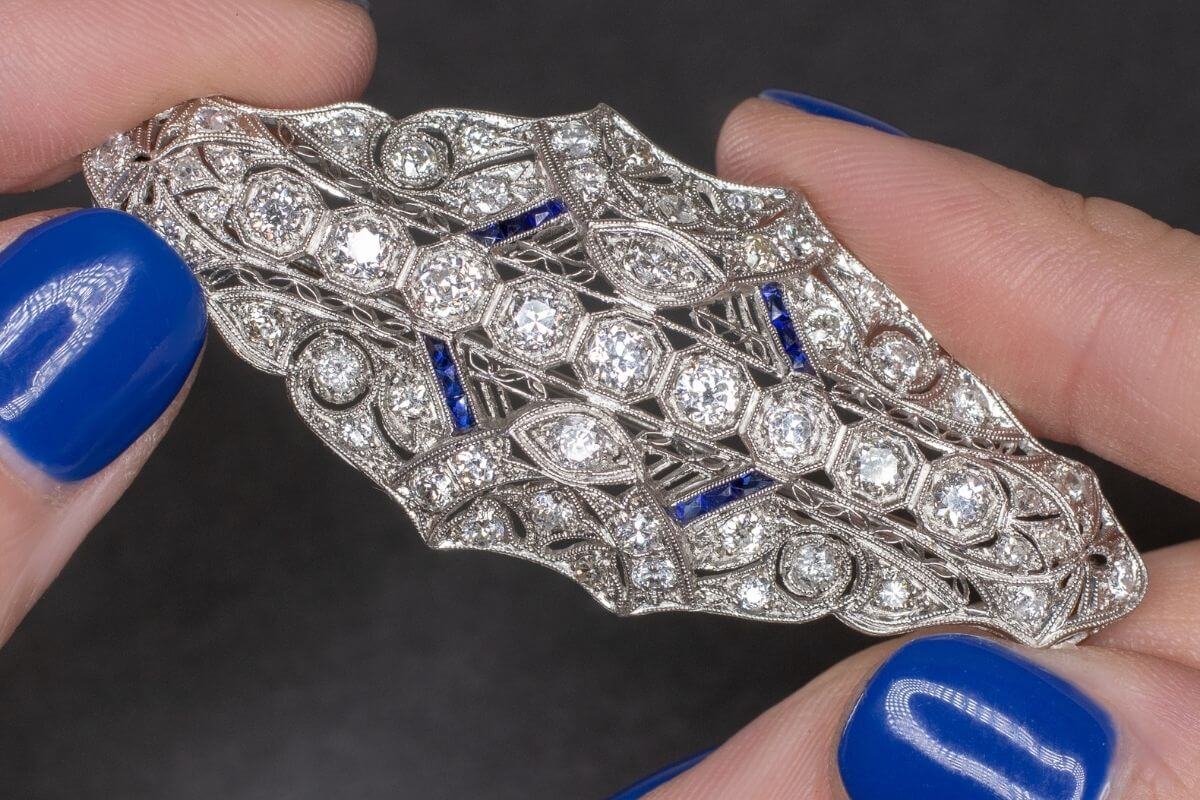
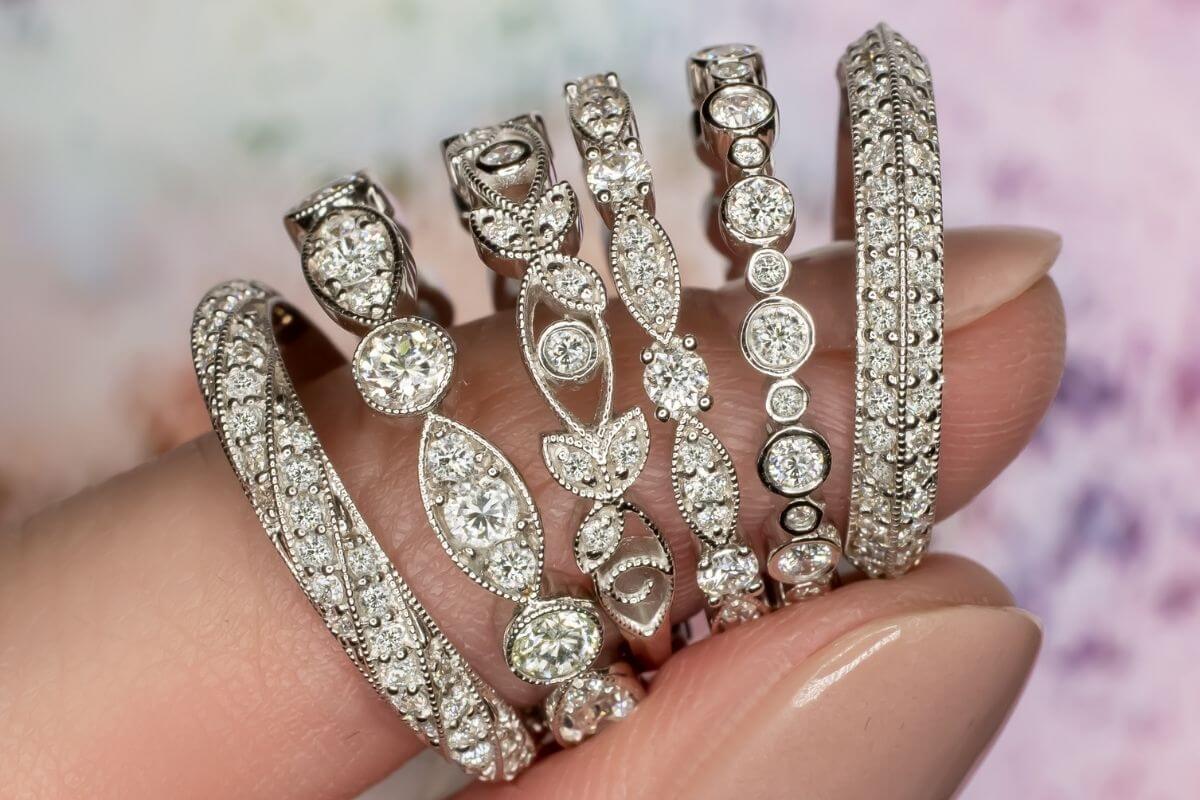
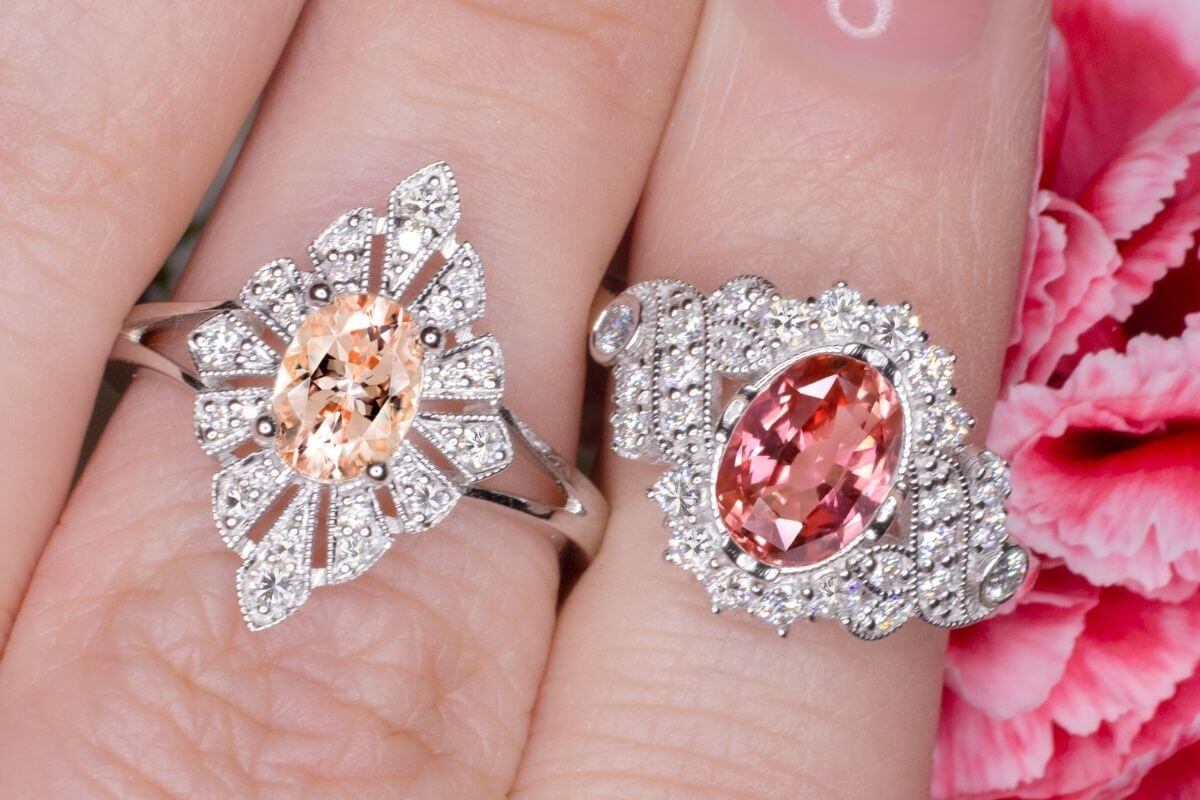
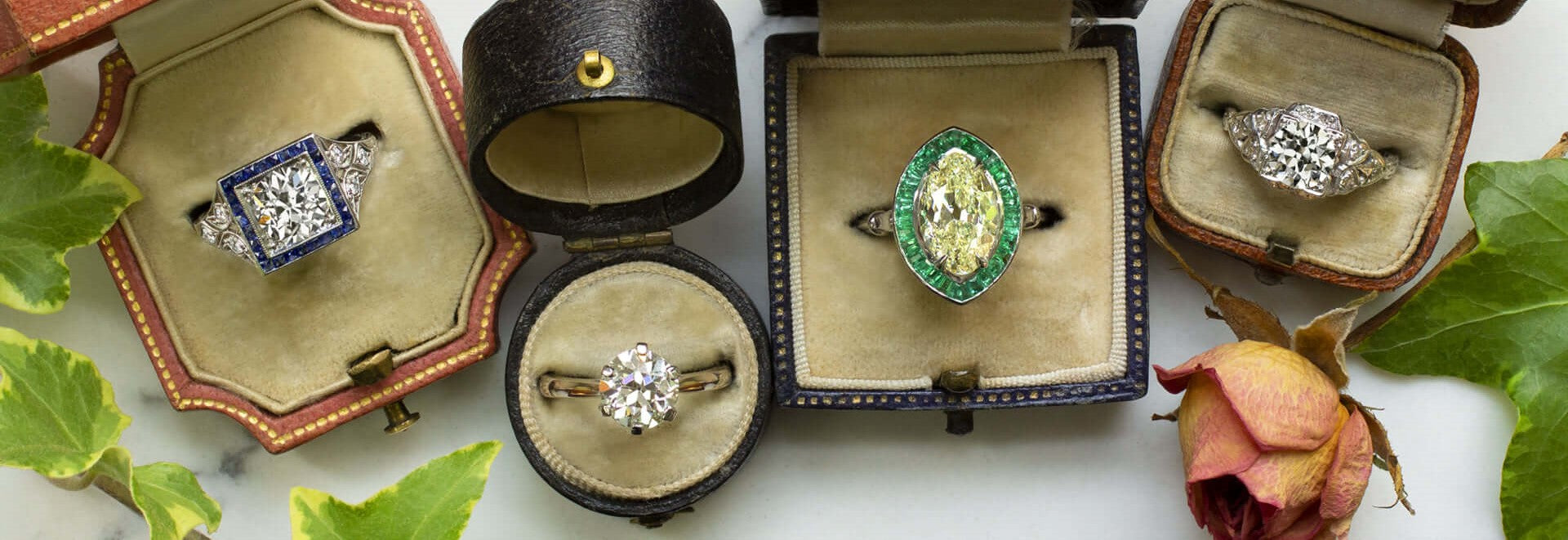

Scroll through engagement ring inspiration long enough and a pattern shows up. The rings that stop people mid-scroll usually aren't the newest ones. They're the ones with some age on them: soft, warm-toned diamonds, hand-cut detailing, a shank that's clearly been loved for decades.
The short answer: "vintage" isn't one specific thing. It's a range of distinct design eras, mainly Victorian, Edwardian, Art Deco, and Retro, each with its own look, its own diamond cuts, and its own trade-offs. Whether you're shopping for an original piece or a faithful reproduction, knowing which era you're actually drawn to, and what to check before you buy, makes the difference between a ring you love and one you regret.
Vintage vs. Antique vs. Estate: What's the Real Difference?
These three words get used interchangeably by sellers, but they don't mean the same thing. In the jewelry trade, antique generally refers to a piece that's at least 100 years old. That 100-year threshold is also used in certain customs and import contexts, though legal definitions can vary by jurisdiction. In 2026, that generally means pieces made before roughly 1926.
Vintage doesn't have a universally fixed cutoff. It's generally used for older jewelry that isn't old enough to be considered antique, often somewhere in the range of 20 to 100 years old, though some jewelers use it more narrowly to describe a specific past era instead. The exact range varies by seller and source, so it's worth asking how old a piece actually is rather than relying on the label alone.
Estate is the loosest term of the three. It simply means previously owned, and says nothing about how old the piece actually is. A ring from last year that was returned or resold could technically be called estate jewelry.
There's a fourth term worth knowing: vintage-inspired, sometimes called vintage-style. This means a brand-new ring made today, designed to look like it came from one of these earlier eras. It's not old at all, and it shouldn't be priced or appraised as an antique simply because it has an antique-inspired design. Because these labels get used loosely, it's worth asking directly how old a piece actually is rather than taking a seller's category label at face value.
A Quick Tour Through the Eras
Each vintage era has a recognizable visual signature, shaped by the materials and techniques available at the time. Jewelry historians don't always agree on exact start and end years, since style shifted gradually rather than overnight, but the ranges below are the ones most commonly used in the antique jewelry trade.
Georgian (roughly 1714 to 1837) is the oldest category you're likely to come across, and surviving pieces are rare. Stones were often foil-backed to boost their appearance in candlelight, and most jewelry was fabricated and finished by hand using techniques very different from modern mass production.
Victorian (1837 to 1901), named for Queen Victoria's reign, leans ornate. Yellow and rose gold were widely used, often set with halos or clusters of smaller stones. Motifs borrowed heavily from nature: bows, hearts, birds, and snakes show up often, along with pearls, turquoise, and blue enamel work alongside diamonds.

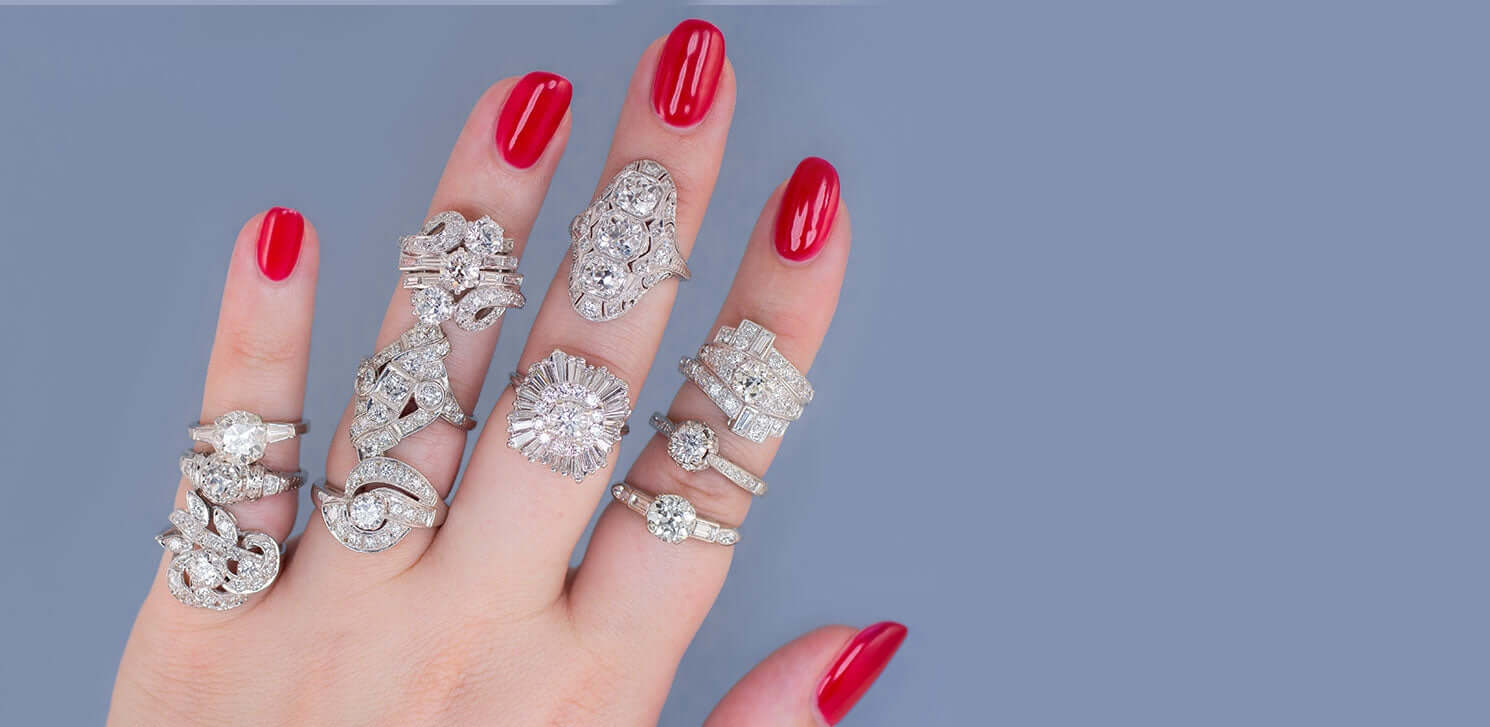
Edwardian (roughly 1901 to the mid-1910s) saw platinum become the dominant metal for many high-end pieces, allowing jewelers to create exceptionally fine, lace-like metalwork. The era takes its name from King Edward VII's reign, but the style continued for a few years past his death until World War I reshaped fashion and manufacturing. Filigree, scrollwork, and ribbon motifs are its hallmark, often paired with floral patterns and colored gemstones.

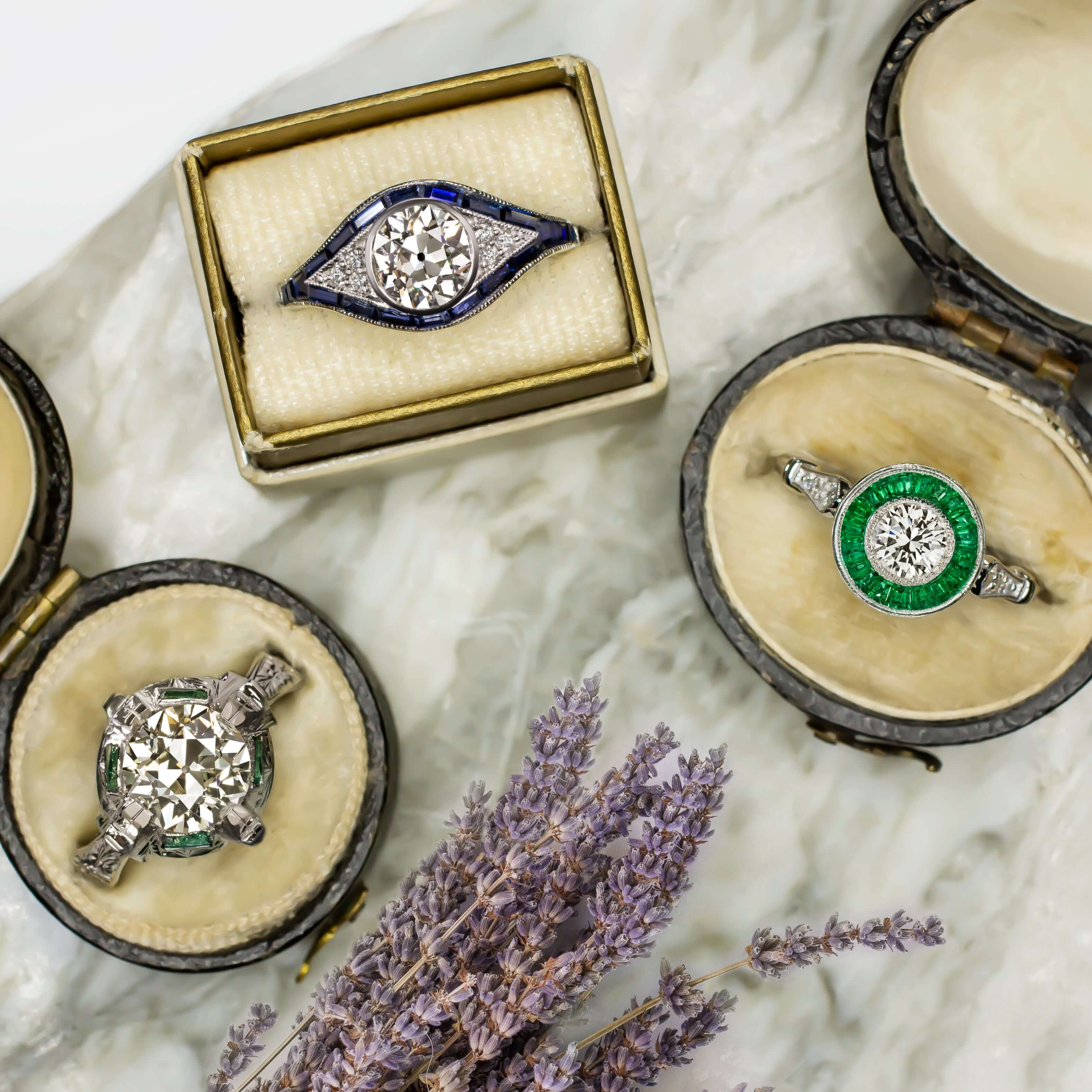
Art Deco (1920s into the 1930s) is a sharp turn away from anything floral. Bold geometry and repeating patterns took over, with step-cut stones like emerald cuts and Asscher cuts playing an important role alongside other geometric shapes. Rubies, sapphires, and emeralds were popular accent stones, and milgrain edging (tiny beaded detailing along the metal) became a characteristic finishing touch.

Retro (mid-1930s through the 1950s) brought larger, chunkier, more sculptural designs. Platinum was restricted for many jewelry uses during World War II, so yellow and rose gold came back into heavy use. Designs often featured substantial center stones paired with baguette or other geometric side stones, reflecting the bold, streamlined aesthetic of the period.


Why Vintage Diamonds Look Different From New Ones
If you've noticed that vintage diamonds seem to glow rather than flash, that's not your imagination. Many older diamonds were cut by hand, producing proportions and facet arrangements that differ from the cuts modern diamonds are engineered to.
The old mine cut shows up most in Georgian and Victorian pieces. It has 58 facets, the same count as a modern round brilliant, but a noticeably soft, squarish outline, a smaller table, a larger culet, and a higher crown. Because old mine diamonds were shaped by hand, they often show individual variation in proportions and facet arrangement.
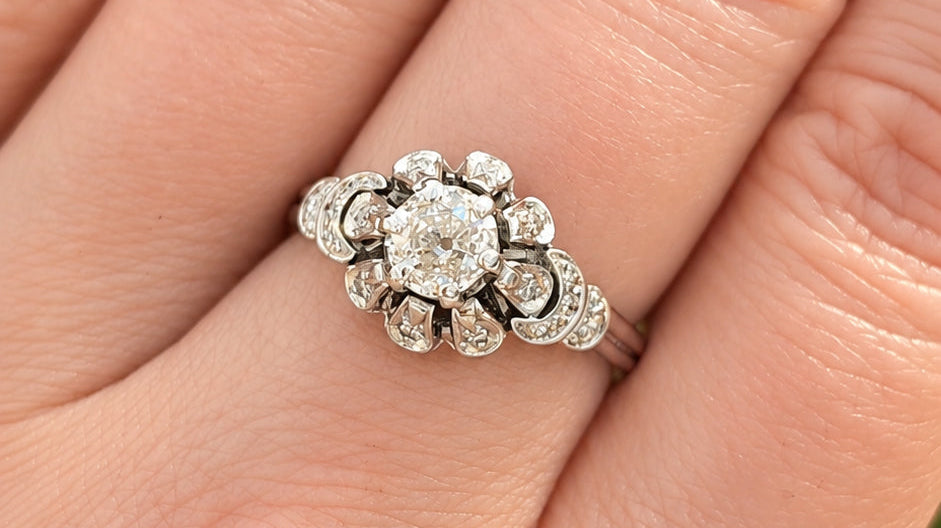
The old European cut is its rounder cousin, which became prominent in the late Victorian and early 20th century. It's generally considered a direct predecessor to the modern round brilliant and still has a larger, more visible culet than today's cuts.
The rose cut is the oldest and simplest of the three: a flat bottom with a faceted, domed top and no pavilion at all. It doesn't produce the fire or brilliance of a brilliant-cut diamond. Instead it glimmers, a softer, more subtle effect that's part of its appeal for people drawn to a romantic, understated look.
Across these older cuts, the difference is a real optical trade-off, not just a stylistic one. Old mine and old European cuts generally show less overall brilliance than a modern round brilliant, since they weren't cut to the mathematically optimized proportions used today, but they make up for it with more pronounced fire, broader, more colorful flashes as light moves through the stone rather than the finer, more uniform sparkle of a modern cut. Rose cuts trade both for something softer still. Neither is objectively better. It comes down to what kind of sparkle you actually want to look at every day.

Price: Is Vintage Actually Cheaper?
Often less expensive, but not automatically, and not universally. Vintage and antique stones typically skip the markup chain that comes with new production, and the labor that shaped them is a sunk cost rather than something you're paying for again, which tends to mean a better price per carat than a comparable new diamond. But prices vary widely depending on the diamond or gemstones themselves, craftsmanship, condition, maker, rarity, provenance, and current demand, and any of those factors can outweigh the usual production-cost advantage.
A ring with a known maker's mark, intact enamel work, unusual craftsmanship, or a particularly sought-after era can command a real premium over a plain modern equivalent, sometimes as much or more than a comparable new ring. Condition matters more here than it does with new jewelry: chipped stones, worn filigree, or a replaced center stone all pull the price down.
One more factor: many vintage and antique pieces predate GIA's standardized grading. GIA developed its International Diamond Grading System in 1953 and issued its first diamond grading reports in 1955, so most older stones were never documented against today's benchmarks. That can make direct comparisons harder and is part of why an independent appraisal is worth the cost before you buy.

What to Check Before You Buy
A few checks apply specifically to vintage and antique pieces, on top of the usual diamond and metal quality checks.
Buy from a dealer who's transparent about age, condition, and sourcing, and who offers a real return policy. Ask directly whether the center stone is original to the setting. A replaced stone isn't necessarily a dealbreaker, but it changes the ring's history and can affect its value, so you want to know going in.
Get an independent appraisal from a qualified gemologist, ideally before you finalize the purchase or shortly after under a return window. Because many older pieces lack modern documentation, an independent appraisal can provide useful information about the ring's condition, characteristics, and value. Check the inside of the shank for hallmarks or maker's marks, which can help confirm metal purity and provide clues about the ring's origin.
Think honestly about wearability. Delicate filigree and thin, hand-cut girdles weren't necessarily built with today's daily-wear expectations in mind. If this will be an everyday ring, budget for a jeweler to inspect and possibly reinforce the setting. And ask before you buy whether the shank can be resized. Intricate vintage detailing, especially filigree and millgrain, can be difficult to resize without damaging the design, so this is worth confirming rather than assuming.
If you're looking at a Georgian piece, one detail is easy to miss: some stones are foil-backed, and the backing can be vulnerable to moisture. That changes the care routine compared to a modern ring and is another reason to ask a jeweler how the specific piece should be cleaned and worn.
Vintage, Vintage-Inspired, or New: Which Should You Choose?
There isn't a universally right answer. It depends on what you're actually optimizing for.
Choose a true vintage or antique piece if what you want is a one-of-a-kind ring with real history behind it, hand-cut character you can't replicate today, and you're comfortable with the extra legwork: appraisal, provenance, and possibly some restoration.
Choose a vintage-inspired or new ring with vintage details if you love the look, filigree, milgrain, or an old-cut-style diamond, but want the durability, warranty, and easier resizing that can come with a newly made piece.
Choose a modern cut and setting if maximum brilliance and low-maintenance daily wear matter more to you than the vintage aesthetic itself.
Whichever direction you lean, the thing that matters most isn't the category. It's buying from someone honest about a piece's age, condition, and history.

Frequently Asked Questions
If you're drawn to the vintage look and want help figuring out which era actually fits how you live day to day, we are always happy to talk it through.


 Exclusive access to limited time discounts